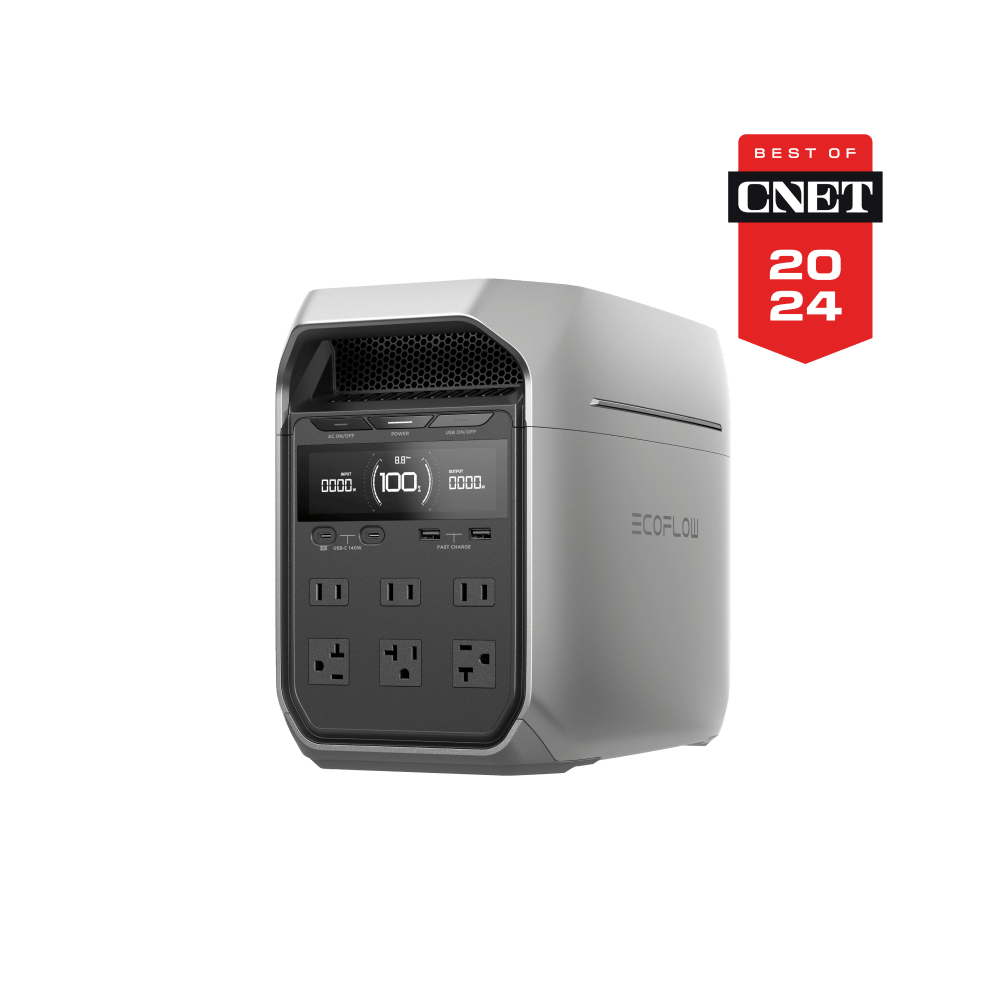
A portable power station has to work for your devices and your routine. Use these checks to narrow the EcoFlow range around output, energy, charging and the practical details of ownership.
1. Match your devices to the output
Write down what you want to power together. Separate essential devices from occasional extras. A phone-and-laptop trip and a backup plan involving appliances are different projects; do not compare them using capacity alone.
Compare the station’s rated output with your devices’ requirements, including startup demand where relevant. EcoFlow lists the RIVER 3 Plus at 600W rated output. That is the figure to distinguish from separately advertised boost capability, rather than assuming the two mean the same thing. [1]
2. Check your energy needs
Capacity is a separate constraint. The RIVER 3 Plus is listed at 286Wh, while the DELTA 3 Plus sits in the 1,024Wh class. These figures help distinguish sizes; they are not guaranteed usable energy or a promise of runtime for a specific appliance. [1, 2]
3. Plan charging and bundle contents
Will you charge before leaving home, replenish from a vehicle or use a compatible solar setup? Check the selected model’s inputs and the equipment needed for your chosen method. Consider the charging opportunity you actually have, not an ideal itinerary.
Base units, expansion packages and solar bundles are not interchangeable. EcoFlow offers expanded configurations within its RIVER 3 family. Read the itemised contents and compare complete baskets so that accessories do not become a surprise cost. [1]
4. Make room for the equipment
Look up the exact unit’s dimensions and weight, then measure the space where you intend to keep it. If portability matters, imagine loading it into the vehicle yourself. A larger specification is not an advantage if the equipment stays at home because it is awkward to move.
5. Verify your US purchase terms
Check delivery availability for your address and the current terms for your chosen package. Keep the manufacturer’s manual accessible and follow its instructions for charging and use. If your project involves home electrical integration, obtain appropriate professional guidance rather than treating a portable station as a plug-in substitute for installed equipment.
Make the final comparison
Shortlist only models that pass the output, capacity and practical-fit checks. Then compare the full purchase cost. This guide does not rank five EcoFlow products and does not claim hands-on testing; it gives you five ways to decide which specification deserves a closer look.